
Frozen Mackerel Fillet Cuts and Packaging Options
Introduction
frozen mackerel fillet cuts is a practical purchasing issue for retailers, foodservice buyers, private-label importers, and processors. It affects quotation comparability, usable yield, handling cost, product consistency, and the way a shipment performs in the final sales channel. This guide answers the buyer’s main search intent: how to understand fillet cutting and packaging options without relying on an abbreviation, nominal size, or carton statement that may be interpreted differently by the supplier and the customer.
Pacific chub mackerel is traded under the scientific name Scomber japonicus, but a complete order still needs processing, freezing, size, weight, packing, quality, and documentation terms. Buyers can first review the frozen Pacific mackerel supply and then use the decision framework below to create a specification that is measurable at production, inspection, loading, and destination receiving.
Common Fillet Presentations
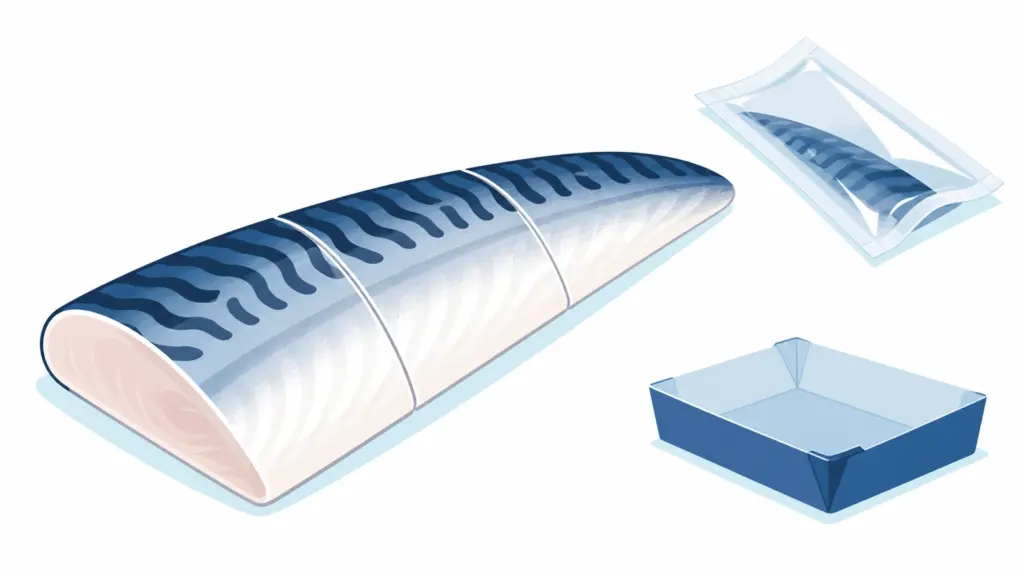
Frozen mackerel fillets can be supplied skin-on, skinless, butterfly cut, trimmed, boneless, or cut into portions. The commercial result depends on several linked variables rather than one label on a quotation. First, skin-on fillets protect appearance and are suitable for grilling or smoking. Second, skinless products require a clear standard for red meat and belly trim. Third, butterfly cuts preserve a broad presentation while reducing central bones. Finally, portion cuts convert variable fillets into target serving weights. Use reference photos and approved samples because the same trade term can mean different trim levels. A written specification should therefore convert every general term into a measurable requirement that can be checked before loading.
| Option | Specification detail to confirm | Best fit |
|---|---|---|
| Skin-on fillet | Scales, belly flap, pin bones, tail trim | Grilling, smoking, retail trays |
| Skinless fillet | Skin removal quality, red meat trim, surface damage | Sauces, ready meals, portioning |
| Butterfly fillet | Back cut or belly cut, head status, backbone removal | Whole-fish presentation and grilling |
| Portion/cut fillet | Piece weight, cut angle, tail-piece allowance | Foodservice and retail portion control |
The Codex Standard for Quick Frozen Fish Fillets defines fillets as cuts made parallel to the backbone and requires the product to be processed and packaged to minimize dehydration and oxidation. Buyers can use this framework when defining trim, presentation and frozen-condition expectations.
Trim and Bone Specifications
The commercial value of a fillet depends heavily on what remains after cutting. Buyers often lose money when they compare offers that use the same product name but different assumptions. The practical checkpoints are pin-bone tolerance must be defined rather than assumed; belly flap retention affects appearance and yield; tail pieces and short fillets may need separate limits; and blood spots, gaping, ragged cuts and exposed bones should have measurable defect criteria. State whether the contract is based on random-weight fillets, fixed-weight portions, or a permitted weight range. This approach makes supplier quotations comparable and gives the inspection team a clear basis for acceptance, rejection, or corrective action.
In practice, frozen mackerel fillet cuts should be compared on a consistent net-product and destination-use basis. The supplier, inspector, and buyer must apply the same definition when measuring compliance.
For related commercial ranges and terminology, compare this decision with the mackerel processing methods.
The Codex Code of Practice for Fish and Fishery Products describes glazing as a protective ice layer applied with suitable water and provides broader good-practice guidance for processing, packaging, storage and distribution. It is a useful reference for building a supplier-control checklist.
IQF, Interleaved, and Block Packing
Packaging should support the way the buyer will thaw, portion, and issue stock. From a procurement perspective, the issue should be evaluated as a yield-and-channel decision. Iqf loose fillets allow individual removal but need good glaze and bag protection, while interleaved layers reduce sticking and simplify separation. In addition, vacuum packs protect retail or foodservice units but require seal-integrity controls, and block packs can be efficient for industrial thawing but do not offer single-piece access. Select the pack after reviewing daily usage, thawing method and inventory rotation. The best choice is the one that delivers the required usable product at the lowest controlled landed cost, not necessarily the lowest FOB price.
A broader explanation of species, origins, freezing and processing is available in the mackerel specification ranges.
The FDA Fish and Fishery Products Hazards and Controls Guidance identifies seafood hazards and control strategies used in HACCP planning. For mackerel, buyers should pay particular attention to supplier time-temperature controls, traceability and scombrotoxin-related procedures.
Retail and Foodservice Formats
A retail pack is designed around consumer information and shelf presentation, while a foodservice pack prioritizes handling efficiency. A robust buying decision separates what can be verified at the factory from what will only become visible after thawing, processing, or sale. Factory checks should cover retail units may use trays, printed bags, vacuum skin packs or cartons and foodservice commonly uses larger inner bags or individually wrapped portions; commercial planning should also account for private-label projects require artwork approval and destination-language checks and case labels should identify species, processing, weight, lot and storage conditions. Confirm whether local rules require additional catch, origin, allergen or nutrition information. Documenting these points in the purchase contract reduces arguments caused by different interpretations of size, weight, processing, or packing.
For repeat programs, frozen mackerel fillet cuts also needs a documented tolerance and sampling method. This prevents one acceptable average from hiding excessive variation among individual cartons or fish.
Receiving and Defect Control
Fillet quality cannot be judged from the master carton alone. The commercial result depends on several linked variables rather than one label on a quotation. First, sample packs from different carton positions. Second, check product temperature and evidence of thaw-refreeze abuse. Third, deglaze or thaw representative units according to an agreed method. Finally, record fillet weight, trim, bones, odour, texture and dehydration. Include a claim procedure that defines sampling, evidence and notification time. A written specification should therefore convert every general term into a measurable requirement that can be checked before loading.
Frozen Mackerel Fillet Cuts Purchase Checklist
Before confirming the order, record the following items in one signed specification:
- Scientific and commercial product name
- Country of origin and traceable lot information
- Processing form and freezing method
- Individual size or count basis, measurement condition, and tolerance
- Declared net fish weight, gross weight, glaze basis, and carton tare
- Inner packaging, outer carton, label language, and storage statement
- Quality defect limits and representative sampling plan
- Required certificates, shipment documents, loading method, and claim procedure
The checklist should be adapted to the destination market. Remove irrelevant items, but keep every parameter that affects yield, legal compliance, product handling, or customer acceptance.
Conclusion
frozen mackerel fillet cuts should be treated as a controlled commercial specification rather than a simple product label. The strongest buying decisions connect the quotation to actual net product, destination handling, processing yield, customer use, and documented quality checks. When these points are aligned before production, importers can compare suppliers more accurately, reduce avoidable claims, and build a repeatable purchasing program.
To confirm current availability, packing, inspection options, and shipment planning, discuss custom fillet packing. Provide the target market, buyer channel, processing form, size range, carton weight, and expected order quantity so the offer can be prepared on a comparable basis.
Looking for a Frozen Seafood Supplier?
Contact HANXING SEAFOOD to confirm current availability, specifications, packing, and quotation details.
Request a Quote