
How Many Tons of Frozen Mackerel Fit in a Reefer Container?
Introduction
frozen mackerel container loading is a practical purchasing issue for FCL importers, logistics teams, wholesalers, and processors. It affects quotation comparability, usable yield, handling cost, product consistency, and the way a shipment performs in the final sales channel. This guide answers the buyer’s main search intent: how to estimate 40-foot reefer loading quantity without relying on an abbreviation, nominal size, or carton statement that may be interpreted differently by the supplier and the customer.
Pacific chub mackerel is traded under the scientific name Scomber japonicus, but a complete order still needs processing, freezing, size, weight, packing, quality, and documentation terms. Buyers can first review the Pacific mackerel loading quantity information and then use the decision framework below to create a specification that is measurable at production, inspection, loading, and destination receiving.
There Is No Single Universal Tonnage
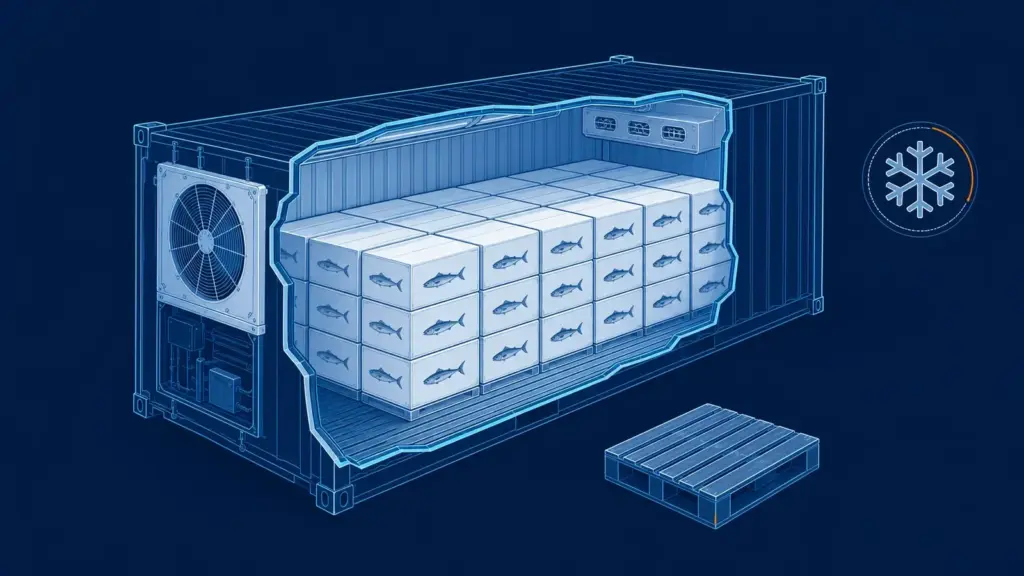
Frozen mackerel container loading is determined by both weight and volume, and the lower practical limit controls the shipment. The commercial result depends on several linked variables rather than one label on a quotation. First, reefer equipment has a maximum gross weight and tare weight. Second, carrier fleets contain containers from different manufacturers. Third, carton size and loading pattern affect cubic utilization. Finally, local road, rail, port and customs limits can be lower than the container’s technical payload. Treat any standard tonnage as a planning estimate that must be confirmed for the actual booking. A written specification should therefore convert every general term into a measurable requirement that can be checked before loading.
| Constraint | What to check | Why it matters |
|---|---|---|
| Equipment payload | Actual container plate and carrier specification | Payload differs by container manufacturer and tare |
| Carton cube | External dimensions and deformation allowance | Volume can limit loading before weight |
| Loading method | Floor-loaded or palletized | Pallets reduce net cargo capacity but improve handling |
| Route rules | Origin, transshipment and destination road/rail limits | Legal route limits may be lower than equipment payload |
The Hapag-Lloyd 40-foot reefer high-cube specifications lists an example maximum payload of 29,580 kg for one 40-foot reefer high-cube design and warns that equipment varies by manufacturer. Actual cargo planning must therefore use the assigned container and route restrictions.
The purchase contract, supplier production instruction, and inspection checklist should use the same units and definitions. Samples and photographs can support the agreement, but measurable criteria are still needed for acceptance. Where natural variation is unavoidable, define the target, permitted tolerance, sampling basis, and remedy for material deviation.
A Practical Calculation Sequence
Start with the specific container and route, then work backward to cartons and fish net weight. Buyers often lose money when they compare offers that use the same product name but different assumptions. The practical checkpoints are maximum cargo payload equals permitted gross weight minus actual tare; planned carton count multiplied by carton gross weight gives cargo gross weight; carton net weight multiplied by carton count gives declared fish quantity; and a safety margin may be needed for weight variation and operational restrictions. Reconcile the booking, verified gross mass, packing list and commercial invoice. This approach makes supplier quotations comparable and gives the inspection team a clear basis for acceptance, rejection, or corrective action.
In practice, frozen mackerel container loading should be compared on a consistent net-product and destination-use basis. The supplier, inspector, and buyer must apply the same definition when measuring compliance.
For related commercial ranges and terminology, compare this decision with the frozen mackerel packaging specifications.
The Codex Standard for Quick Frozen Finfish covers frozen finfish with or without the head and with viscera completely or partly removed. It also requires quick freezing to reach -18°C or colder at the thermal centre, suitable labelling, and net-content declarations that exclude glaze for glazed products.
A commercial comparison should separate price from value. Freight, duty, cold storage, financing, labour, shrink, and claims can change the result after arrival. Calculate cost per saleable or processable kilogram and test the assumptions with representative sample data.
Floor Loading vs Pallets
Floor loading normally maximizes tonnage, while palletization can reduce cargo quantity in exchange for handling speed and product protection. From a procurement perspective, the issue should be evaluated as a yield-and-channel decision. Pallet footprint creates unused spaces, while pallet and wrapping materials add tare. In addition, forklift handling can reduce manual carton damage, and some customers or warehouses require specific pallet dimensions. Quote the loading quantity with the assumed loading method clearly stated. The best choice is the one that delivers the required usable product at the lowest controlled landed cost, not necessarily the lowest FOB price.
A broader explanation of species, origins, freezing and processing is available in the Pacific mackerel sourcing guide.
The Codex Code of Practice for Fish and Fishery Products describes glazing as a protective ice layer applied with suitable water and provides broader good-practice guidance for processing, packaging, storage and distribution. It is a useful reference for building a supplier-control checklist.
Quality teams should preserve lot codes, scale readings, temperature data, photographs, individual weights, defect records, and document copies. Consistent evidence makes supplier performance measurable across shipments and provides a clearer basis for corrective action.
Why 27–28 MT May Appear in Offers
Some frozen mackerel suppliers publish a working range around 27–28 metric tons for a 40-foot reefer, but it is not a universal guarantee. A robust buying decision separates what can be verified at the factory from what will only become visible after thawing, processing, or sale. Factory checks should cover dense floor-loaded cartons can approach equipment payload and actual payload can be close to 29.5 metric tons on some equipment before route restrictions; commercial planning should also account for box dimensions and gross weight variation can reduce the count and destination transport rules may require a lower load. Confirm the final plan with the shipping line, forwarder and destination transporter. Documenting these points in the purchase contract reduces arguments caused by different interpretations of size, weight, processing, or packing.
For repeat programs, frozen mackerel container loading also needs a documented tolerance and sampling method. This prevents one acceptable average from hiding excessive variation among individual cartons or fish.
The purchase contract, supplier production instruction, and inspection checklist should use the same units and definitions. Samples and photographs can support the agreement, but measurable criteria are still needed for acceptance. Where natural variation is unavoidable, define the target, permitted tolerance, sampling basis, and remedy for material deviation.
Loading Quality and Cold Airflow
Maximizing tonnage must not compromise reefer performance or carton condition. The commercial result depends on several linked variables rather than one label on a quotation. First, product should be at transport temperature before loading. Second, air channels and the T-floor must not be obstructed. Third, damaged or bulging cartons reduce stable stacking. Finally, loading time and door-open exposure should be controlled. Use a loading plan, temperature records, seal record and photographic evidence. A written specification should therefore convert every general term into a measurable requirement that can be checked before loading.
A commercial comparison should separate price from value. Freight, duty, cold storage, financing, labour, shrink, and claims can change the result after arrival. Calculate cost per saleable or processable kilogram and test the assumptions with representative sample data.
Frozen Mackerel Container Loading Purchase Checklist
Before confirming the order, record the following items in one signed specification:
- Scientific and commercial product name
- Country of origin and traceable lot information
- Processing form and freezing method
- Individual size or count basis, measurement condition, and tolerance
- Declared net fish weight, gross weight, glaze basis, and carton tare
- Inner packaging, outer carton, label language, and storage statement
- Quality defect limits and representative sampling plan
- Required certificates, shipment documents, loading method, and claim procedure
The checklist should be adapted to the destination market. Remove irrelevant items, but keep every parameter that affects yield, legal compliance, product handling, or customer acceptance.
Conclusion
frozen mackerel container loading should be treated as a controlled commercial specification rather than a simple product label. The strongest buying decisions connect the quotation to actual net product, destination handling, processing yield, customer use, and documented quality checks. When these points are aligned before production, importers can compare suppliers more accurately, reduce avoidable claims, and build a repeatable purchasing program.
To confirm current availability, packing, inspection options, and shipment planning, confirm a container loading plan. Provide the target market, buyer channel, processing form, size range, carton weight, and expected order quantity so the offer can be prepared on a comparable basis.
Request a Specification-Based Quotation
Ask for a quotation that states every commercial parameter used in the price. A complete offer is more useful than a low headline number that leaves size, glaze, net weight, packing, or tolerance open to interpretation.
Looking for a Frozen Seafood Supplier?
Contact HANXING SEAFOOD to confirm current availability, specifications, packing, and quotation details.
Request a Quote