
China Frozen Fish Export Ports: Choosing the Right Gateway
Introduction
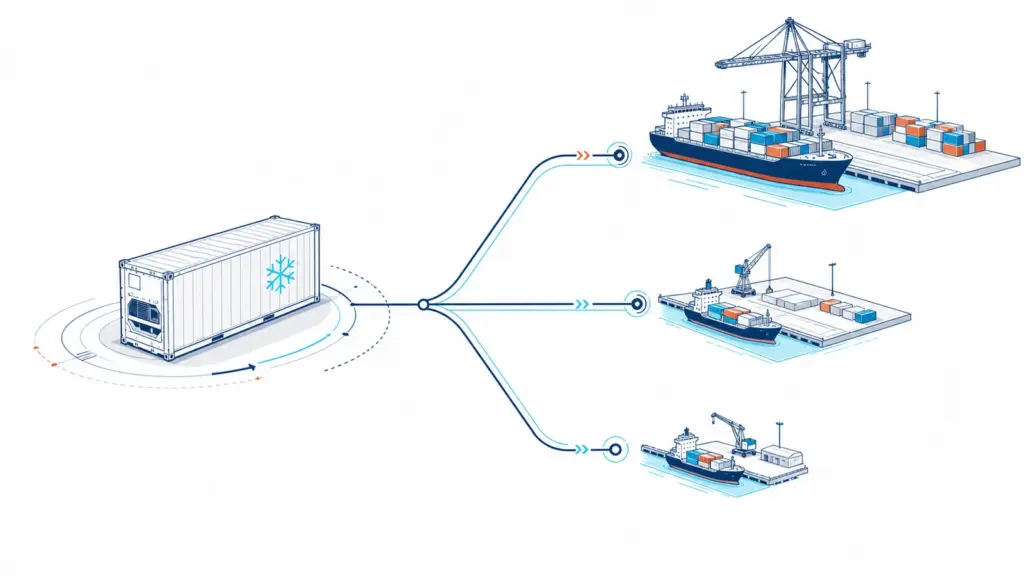
China Frozen Fish Export Ports should be selected by total supply-chain performance, not by name recognition alone. A port that is geographically close to the factory may have a poor sailing schedule for the destination, while a more distant port may offer a direct service, better reefer availability, or lower overall risk. For importers, the decision affects inland trucking, product temperature exposure, booking reliability, transit time, transshipment, document cut-offs, and landed cost. Hanxing Seafood’s Pacific mackerel page lists several possible Chinese loading ports for that product, illustrating why the final port should be confirmed for each shipment.
Table of Contents
- How to Compare China Frozen Fish Export Ports
- Evaluate Reefer Equipment and Terminal Services
- Xiamen as a Major Fujian Gateway
- Fuzhou and Jiangyin for Northern and Central Fujian
- Quanzhou-Area Port Options
- Other Chinese Ports in Frozen Fish Trade
- Direct Service Versus Transshipment
- Freight Volatility and Contract Planning
- Customs, Health Documents, and Cut-Off Discipline
- Compare Total Landed Cost, Not Port Charges Alone
- A Port-Selection Checklist for Importers
- Conclusion
How to Compare China Frozen Fish Export Ports
The first calculation is the actual route from the finished-goods cold store to the terminal gate. The exporter’s office address may be unrelated to the loading point. Buyers should ask for the processing plant, cold store, container depot, and port locations. Inland distance affects trucking cost, power requirements, congestion exposure, and the time available before cut-off. A short route can simplify operations, but only if the port has the required carrier service. The quotation should name the port clearly, and any change after contract should require buyer approval when it affects cost, transit, or documents.
Evaluate Reefer Equipment and Terminal Services
Frozen fish requires a functioning refrigerated container, suitable depot support, terminal plug capacity, and technicians who can respond to alarms. During peak seasons, equipment shortages may affect booking reliability. Exporters should confirm container availability rather than assume it. Importers can ask which carrier supplies the unit, where the pre-trip inspection occurs, how long the loaded container may travel without power, and whether terminal gate appointments are needed. Port choice should also consider customs inspection arrangements and the availability of cold-chain support if a container must be opened. These operational details are more important than broad statements that a port is “large” or “modern.”
Xiamen as a Major Fujian Gateway
Xiamen is an important container gateway for Fujian and neighboring manufacturing areas. The Xiamen Municipal Bureau of Commerce port information provides official updates on port activity, while an official Fujian report on Xiamen container routes describes the expanding Silk Road Maritime network and Xiamen’s role as a core hub. For frozen seafood exporters in southern and central Fujian, Xiamen may offer broad carrier choice and international connections. Buyers should still compare the specific weekly service, destination routing, transshipment port, terminal cut-off, and reefer surcharge for their shipment rather than rely on general network scale.
Fuzhou and Jiangyin for Northern and Central Fujian
Fuzhou’s port areas, including Jiangyin, can be practical for factories and cold stores in Fuzhou, Fuqing, Ningde, Putian, and parts of central Fujian. The advantage may be shorter inland transport or a service aligned with a specific Asian or international route. The buyer should verify whether the shipment departs from the named terminal, whether the service is direct, and how often it sails. A route that appears shorter on a map may involve feeder transport or an extra transshipment. Ask for the carrier schedule and compare actual historical transit performance when possible. Port choice should also account for local inspection and documentation workflows.
Quanzhou-Area Port Options
Quanzhou and nearby port areas can support regional exports, but service coverage varies by terminal and destination. Some frozen fish cargo may move through a local gateway, while other shipments are trucked to Xiamen or Fuzhou for a more suitable mainline service. For a Shishi or Quanzhou supplier, the cheapest local trucking quote is not necessarily the best commercial option if sailing frequency is limited. Buyers should ask the exporter to present at least two routing alternatives when freight conditions are unstable. Hanxing’s About Us page confirms its published base in Shishi, Fujian, but the actual loading port for each order must be stated in the quotation and booking.
Other Chinese Ports in Frozen Fish Trade
Depending on product origin, processing location, and carrier network, frozen fish may also depart from Ningbo, Shanghai, Qingdao, Dalian, Tianjin, Shenzhen, Guangzhou-area terminals, or other coastal ports. A factory may use a non-local port because raw material, consolidation, or vessel service makes it commercially sensible. Buyers should avoid assuming that “China origin” means a particular coast or fishing area. The country of origin, processing establishment, and port of loading are different data points. A longer inland movement requires stronger control of reefer power and handover records, but it can still be acceptable when the total route is reliable.
Direct Service Versus Transshipment
Direct service reduces handling points and may improve predictability, but it can have a longer sailing loop or less frequent departures. Transshipment offers wider coverage but introduces another terminal, schedule connection, and potential delay. The correct choice depends on product value, inventory urgency, destination plug capacity, and the buyer’s tolerance for variability. Request the planned transshipment port and typical connection time. Consider seasonal weather and congestion patterns. If the importer’s stock is low, a slightly higher freight rate for a more reliable route may be economically better than a cheaper service with repeated rollovers.
Freight Volatility and Contract Planning
The UNCTAD maritime transport review documents continuing volatility and disruption in global shipping. For frozen fish, freight changes are magnified by reefer surcharges, power costs, equipment imbalance, and long transit times. Buyers should clarify how long a freight quote is valid, whether the sales price includes known surcharges, and what happens if the carrier rolls the booking. Under FOB terms, the buyer’s nominated forwarder may influence routing, while under CFR or CIF the seller normally arranges ocean freight. Responsibilities should be written clearly, including document cut-offs, verified gross mass, insurance where applicable, and notification of schedule changes.
Customs, Health Documents, and Cut-Off Discipline
Frozen seafood shipments often require coordination between customs declaration, health certification, inspection, certificate of origin, shipping instructions, and terminal gate-in. The selected port must support the planned document and inspection process. A container may be physically ready but miss the vessel because one document or inspection result is late. Buyers should request a shipment timeline showing production completion, inspection, document application, empty-container release, loading, customs declaration, terminal cut-off, and estimated departure. Early draft review reduces inconsistencies between invoice, packing list, health certificate, bill of lading, and carton labels.
Compare Total Landed Cost, Not Port Charges Alone
A port comparison should include inland reefer transport, container depot fees, terminal handling, documentation, customs services, inspection, ocean freight, surcharges, transit inventory cost, transshipment risk, destination charges, and potential demurrage. The cheapest ocean rate may create a higher total cost if the transit is slow or unreliable. For regular programs, importers should track actual departure, arrival, claims, and unexpected charges by route. This creates a data-based port strategy rather than relying on one forwarder’s opinion. Hanxing’s market trends article also emphasizes lead-time planning and logistics risk for frozen seafood buyers.
A Port-Selection Checklist for Importers
Before approving a port, confirm: factory and cold-store location; inland distance; reefer source; carrier and service name; direct or transshipment route; sailing frequency; cut-off; planned transit time; free-time terms; expected surcharges; document process; and backup sailing. Ask who monitors the container after gate-in and who communicates changes. For a new route, consider an independent loading inspection and data logger. The goal is to choose a gateway that supports product quality, document accuracy, and inventory planning at an acceptable total cost. Port flexibility is valuable, but frequent unplanned changes can create confusion and should be controlled through written approval.
Conclusion
China offers many frozen fish gateways, and no single port is best for every order. The correct choice links the processing and cold-store location to reefer availability, carrier service, sailing frequency, transit time, transshipment risk, customs workflow, and total landed cost. Importers who evaluate China Frozen Fish Export Ports with a complete route model can reduce delays and avoid selecting a port based only on distance or a low headline freight rate. The final quotation and contract should always state the named loading port and the responsibilities for booking, loading, documents, and schedule communication.
Request a Quote
For an order-specific quotation and available port options, contact Hanxing Seafood with the product, quantity, Incoterm, destination, and preferred shipping window.
Looking for a Frozen Seafood Supplier?
Contact HANXING SEAFOOD to confirm current availability, specifications, packing, and quotation details.
Request a Quote