
How Frozen Mackerel Is Loaded into Reefer Containers for Export
Introduction
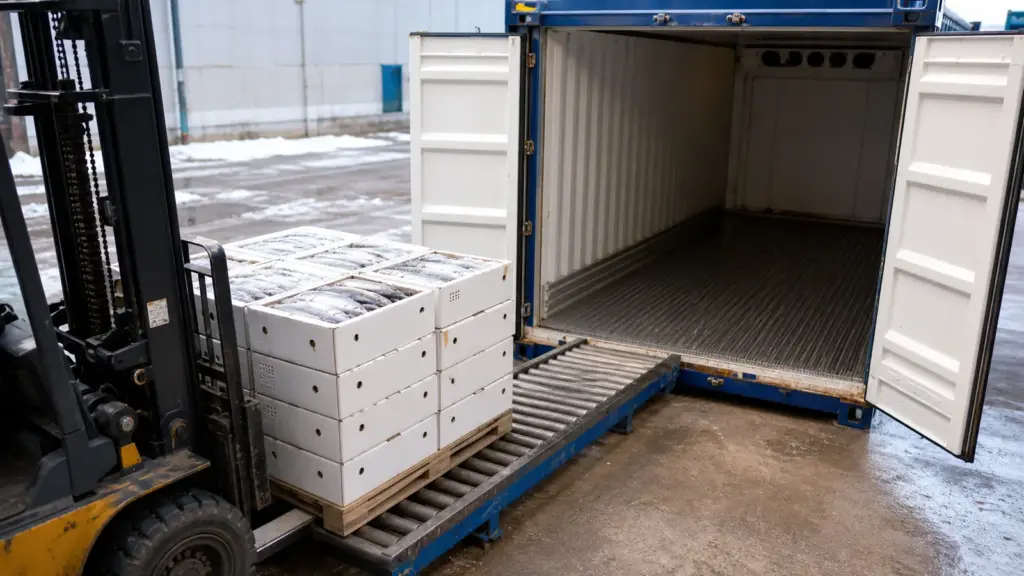
Frozen Mackerel Container Loading is the final physical control point before an export shipment enters the port and carrier network. A well-produced lot can still suffer if cartons are warm, the reefer is damaged, airflow is blocked, loading is slow, or records are incomplete. Container loading therefore requires coordination between the cold store, exporter, trucker, carrier, inspection team, and port cut-off. The workflow below is a general industry practice, not a description of Hanxing Seafood’s own operations. Buyers can compare the intended shipment with the published loading and storage information on Hanxing’s Pacific mackerel product page.
Table of Contents
- Frozen Mackerel Container Loading Starts with Planning
- Reefer Container Condition and Pre-Trip Status
- Pre-Cooling the Container and Staging the Product
- Maintain Airflow Inside the Reefer
- Control Loading Speed and Door-Open Time
- Verify Quantity, Lot, and Carton Markings
- Temperature Measurement and Evidence
- Set Point, Ventilation, and Power Connection
- Seal the Container and Complete the Handover
- Port and Ocean Risks After Loading
- Common Loading Mistakes to Prevent
- Conclusion
Frozen Mackerel Container Loading Starts with Planning
The loading plan should be prepared from the sales contract, packing list, booking confirmation, and cold-store inventory. It identifies the product lot, carton count, net and gross weight, container type, temperature set point, ventilation setting if applicable, port, vessel, cut-off, and inspection requirements. The team should also confirm whether the cargo will be floor-loaded or palletized and whether destination weight restrictions apply. Last-minute changes create errors, especially when multiple customers use similar cartons. The cold store should pre-pick the correct lots and keep held or unapproved stock physically blocked. A loading checklist assigns responsibility for container inspection, temperature readings, tally, photographs, sealing, and document release.
Reefer Container Condition and Pre-Trip Status
A reefer container should arrive with an acceptable pre-trip inspection status from the carrier or depot. The loading team still needs a visual check for cleanliness, odor, holes, damaged door seals, floor condition, blocked drains, loose panels, and evidence of previous contamination. The container number must match the booking. If the unit is dirty, wet, damaged, or has an unusual smell, the safest action is to reject it and request a replacement rather than load and argue later. The refrigeration unit, display, power cable, and set point should be checked by trained personnel. Any discrepancy should be recorded before loading begins.
Pre-Cooling the Container and Staging the Product
The FAO frozen fish transport guidance recommends pre-cooling and rapid loading to minimize temperature rise. Product should already be frozen to the agreed condition in the cold store; the reefer is not intended to pull down a warm cargo. Pre-cooling practices must be coordinated with local humidity and loading arrangements because opening a very cold container in warm, humid air can create condensation or ice. Cartons should be staged close to the loading door for the shortest practical time, with doors kept closed until the team is ready. Temperature samples should be taken from representative cartons, not only from the easiest carton at the front.
Maintain Airflow Inside the Reefer
Reefer containers circulate cold air through the floor channels and return path. Cartons should not cover the red load line, block the machinery end, or create unstable stacks. Floor-loaded cartons are arranged tightly enough to prevent movement but not in a way that prevents designed airflow. Pallets must be suitable for the container and destination rules. Broken cartons, protruding straps, and collapsed stacks can obstruct circulation during transit. The exact pattern depends on carton dimensions, quantity, and reefer design, so a standard diagram should be adapted to the actual load. Loading photographs from the machinery end, middle, door end, and final row provide useful evidence.
Control Loading Speed and Door-Open Time
The loading team must work quickly without sacrificing tally accuracy or worker safety. A sealed connection between cold store and container is ideal, but many facilities load across a short exposed gap. In hot climates, repeated pauses can warm surface cartons and introduce moisture. Forklifts or manual teams should follow a planned sequence so the container does not need to be partially unloaded to correct a mistake. If an inspection company selects random cartons, sampling should be coordinated before final rows close access. Start and finish times, weather conditions where relevant, and any interruptions should be documented. A long unexplained loading time is a warning sign during a later temperature claim.
Verify Quantity, Lot, and Carton Markings
A tally person records cartons by lot and product code as they enter the container. This count should reconcile with the commercial packing list and cold-store dispatch record. Mixed size grades or production dates may be acceptable only when the contract permits them and the packing list identifies them. Carton markings should face outward where practical for receiving checks. Damaged, wet, open, or incorrectly printed cartons should be replaced before loading. Buyers can use Hanxing’s frozen seafood product catalog to define the product name and size information included in an inquiry, but the final carton description must match the contract, health documents, invoice, and bill of lading.
Temperature Measurement and Evidence
Temperature evidence should be collected with calibrated instruments and a defined sampling method. Surface readings alone may not represent the product core, while inserting probes can damage packaging or product if done improperly. The method should be agreed in advance, especially for independent inspection. Record the instrument identification, calibration status, carton locations, readings, date, and time. Data loggers may be placed in the cargo when commercially justified, but their position and retrieval plan matter. The FAO freezing and cold-chain guidance supports systematic monitoring throughout frozen product handling. Evidence is most useful when it is traceable to the exact container and lot.
Set Point, Ventilation, and Power Connection
Frozen fish is normally shipped with ventilation closed unless the carrier’s instructions or product requirements state otherwise. The set point should match the booking and contract, and the unit should be connected to power promptly after loading. Teams should distinguish between set point, supply-air temperature, return-air temperature, and actual product temperature; they are related but not identical. The exporter or forwarder should verify the unit remains powered during inland transfer and terminal handling. If the container waits at the factory without power, the duration should be minimized and documented. A reefer alarm or abnormal display must be resolved before the truck departs.
Seal the Container and Complete the Handover
After final verification, the doors are closed and a high-security seal is applied. The seal number, container number, truck details, date, and time should appear consistently in loading records and shipping instructions. Photographs should show the closed doors, number plates, seal, and refrigeration display. The driver receives instructions for port delivery, and the exporter confirms customs and terminal deadlines. If the buyer requires a surveyor’s loading report, it should identify the inspected lot, quantities, temperatures, container, seal, and any exceptions. Hanxing’s contact page is the appropriate place to request order-specific shipment information and quotation details.
Port and Ocean Risks After Loading
Once the container leaves the factory, risk shifts to trucking, customs, terminal operations, vessel schedules, and ocean transport. The UNCTAD Review of Maritime Transport 2025 highlights ongoing volatility and disruption in maritime logistics. Importers should therefore avoid planning inventory around an ideal transit time alone. They should monitor gate-in, loaded-on-board status, transshipment events, estimated arrival changes, and destination free time. Cargo insurance, carrier liability limits, and claim-notification requirements should be understood before a problem occurs. The seller and buyer should agree who receives reefer exception notices and who has authority to request action.
Common Loading Mistakes to Prevent
Frequent mistakes include loading warm product, accepting a dirty container, blocking airflow, exceeding load lines, mixing unapproved lots, using incorrect cartons, recording the wrong seal, leaving doors open during delays, and failing to connect power quickly. Another error is treating photos as a substitute for measurements and records. A strong loading file includes the booking, container inspection, tally, temperature checks, carton photos, loading sequence, seal evidence, dispatch time, and any survey report. These documents protect both buyer and seller because they show the cargo condition at the transfer point. Repeated use of the same checklist also makes performance easier to compare across shipments.
Conclusion
Reefer loading is not simply the act of filling a container. It is a controlled transfer from frozen storage into an international transport system. Successful Frozen Mackerel Container Loading requires a suitable unit, cold product, disciplined staging, protected airflow, accurate tally, temperature evidence, correct settings, prompt power connection, secure sealing, and complete records. Importers should include these controls in supplier qualification and purchase contracts, especially for new routes or large-volume shipments. When loading evidence is clear, responsibility is easier to determine and cold-chain risk is easier to manage.
Request a Quote
To request pricing and discuss packing, loading quantity, Incoterm, and destination requirements, contact Hanxing Seafood with your full frozen mackerel inquiry.
Looking for a Frozen Seafood Supplier?
Contact HANXING SEAFOOD to confirm current availability, specifications, packing, and quotation details.
Request a Quote