
Whole Round, H&G, HGT, and Fillet Mackerel: Key Differences
Introduction
mackerel processing forms is a practical purchasing issue for global importers, wholesalers, foodservice buyers, and processors. It affects quotation comparability, usable yield, handling cost, product consistency, and the way a shipment performs in the final sales channel. This guide answers the buyer’s main search intent: how to compare processing forms before purchasing without relying on an abbreviation, nominal size, or carton statement that may be interpreted differently by the supplier and the customer.
Pacific chub mackerel is traded under the scientific name Scomber japonicus, but a complete order still needs processing, freezing, size, weight, packing, quality, and documentation terms. Buyers can first review the frozen Pacific mackerel product options and then use the decision framework below to create a specification that is measurable at production, inspection, loading, and destination receiving.
What Each Mackerel Processing Form Means
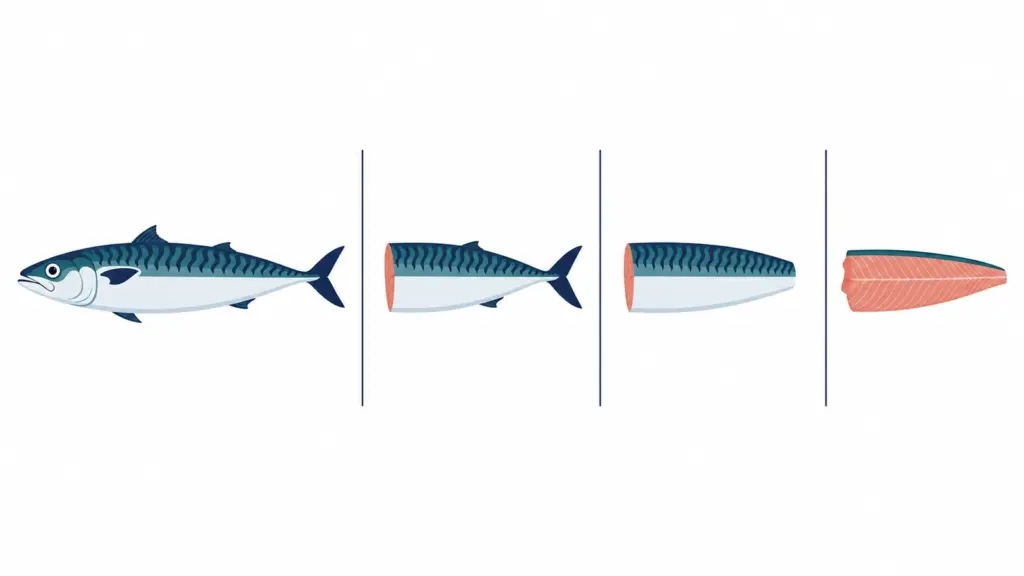
Whole Round, H&G, HGT, and fillet are not quality grades; they describe how much physical processing has been completed before freezing. The commercial result depends on several linked variables rather than one label on a quotation. First, Whole Round retains the complete fish and gives the buyer maximum cutting flexibility. Second, H&G removes the head and viscera but normally keeps the tail. Third, HGT also removes the tail, producing a shorter and more uniform body. Finally, fillet specifications must state skin, bones, belly flap, trim and pin-bone expectations. Ask the supplier to use both the abbreviation and a plain-English definition on the specification sheet. A written specification should therefore convert every general term into a measurable requirement that can be checked before loading.
| Form | What is removed | Main commercial advantage | Typical buyer use |
|---|---|---|---|
| Whole Round (WR) | Nothing; head, viscera and tail remain | Lowest processing input and flexible downstream use | Wholesale, traditional retail, processors with full cutting capability |
| H&G | Head and viscera | Cleaner handling and reduced non-edible material | Foodservice, smokers, portioning plants |
| HGT | Head, viscera and tail | More standardized body length and easier machine handling | Industrial portioning and value-added processing |
| Fillet | Backbone and most frame removed; trim varies | Convenience and high usable yield at destination | Retail, ready-to-cook, catering and further processing |
The Codex Standard for Quick Frozen Finfish covers frozen finfish with or without the head and with viscera completely or partly removed. It also requires quick freezing to reach -18°C or colder at the thermal centre, suitable labelling, and net-content declarations that exclude glaze for glazed products.
Yield, Labour, and Landed-Cost Effects
Removing more material at origin usually raises the unit price per kilogram but can reduce waste, labour, drainage, and disposal costs at destination. Buyers often lose money when they compare offers that use the same product name but different assumptions. The practical checkpoints are the quoted kilogram basis may refer to a product with very different edible yield; freight is paid on every kilogram loaded, including parts the buyer may discard; destination labour and waste-disposal costs can offset a lower whole-fish purchase price; and fillets require tighter control of trim loss, broken pieces and bone defects. Compare offers using expected saleable or processable yield rather than carton price alone. This approach makes supplier quotations comparable and gives the inspection team a clear basis for acceptance, rejection, or corrective action.
In practice, mackerel processing forms should be compared on a consistent net-product and destination-use basis. The supplier, inspector, and buyer must apply the same definition when measuring compliance.
For related commercial ranges and terminology, compare this decision with the common frozen mackerel specifications.
The Codex Standard for Quick Frozen Fish Fillets defines fillets as cuts made parallel to the backbone and requires the product to be processed and packaged to minimize dehydration and oxidation. Buyers can use this framework when defining trim, presentation and frozen-condition expectations.
Freezing and Packing Choices by Form
Processing form must be paired with a suitable freezing and packing method. From a procurement perspective, the issue should be evaluated as a yield-and-channel decision. Whole round products can be supplied iqf or block frozen depending on market practice, while H&G and HGT bodies need protection against dehydration at cut surfaces. In addition, fillets may be interleaved, individually wrapped, vacuum packed or packed IQF in bags, and carton strength and inner liners must match handling, stacking and moisture conditions. Approve a packing diagram and finished-carton sample before mass production. The best choice is the one that delivers the required usable product at the lowest controlled landed cost, not necessarily the lowest FOB price.
A broader explanation of species, origins, freezing and processing is available in the Pacific mackerel processing guide.
The FDA Fish and Fishery Products Hazards and Controls Guidance identifies seafood hazards and control strategies used in HACCP planning. For mackerel, buyers should pay particular attention to supplier time-temperature controls, traceability and scombrotoxin-related procedures.
Quality Inspection Points
Inspection criteria change as processing becomes more intensive. A robust buying decision separates what can be verified at the factory from what will only become visible after thawing, processing, or sale. Factory checks should cover Whole Round inspection emphasizes skin, belly condition, odour, size and physical damage and H&G inspection adds cavity cleaning, bloodline removal and cut quality; commercial planning should also account for HGT inspection also checks tail-cut consistency and body length and fillet inspection must cover trim, bones, gaping, blood spots, dehydration and piece-weight tolerance. Create separate defect limits for each processing form instead of applying one generic checklist. Documenting these points in the purchase contract reduces arguments caused by different interpretations of size, weight, processing, or packing.
How Buyers Should Choose
The correct format depends on the buyer’s equipment, labour cost, customer presentation, and sales channel. The commercial result depends on several linked variables rather than one label on a quotation. First, traditional wholesalers may value Whole Round flexibility. Second, restaurants often prefer H&G, HGT or fillets to reduce preparation time. Third, processors should model raw-material yield on their own line. Finally, retail programs need consistent appearance, piece weight and consumer-ready labelling. Run a controlled trial shipment or sample production when changing from one form to another. A written specification should therefore convert every general term into a measurable requirement that can be checked before loading.
Mackerel Processing Forms Purchase Checklist
Before confirming the order, record the following items in one signed specification:
- Scientific and commercial product name
- Country of origin and traceable lot information
- Processing form and freezing method
- Individual size or count basis, measurement condition, and tolerance
- Declared net fish weight, gross weight, glaze basis, and carton tare
- Inner packaging, outer carton, label language, and storage statement
- Quality defect limits and representative sampling plan
- Required certificates, shipment documents, loading method, and claim procedure
Conclusion
mackerel processing forms should be treated as a controlled commercial specification rather than a simple product label. The strongest buying decisions connect the quotation to actual net product, destination handling, processing yield, customer use, and documented quality checks. When these points are aligned before production, importers can compare suppliers more accurately, reduce avoidable claims, and build a repeatable purchasing program.
To confirm current availability, packing, inspection options, and shipment planning, contact the Hanxing Seafood team. Provide the target market, buyer channel, processing form, size range, carton weight, and expected order quantity so the offer can be prepared on a comparable basis.
Looking for a Frozen Seafood Supplier?
Contact HANXING SEAFOOD to confirm current availability, specifications, packing, and quotation details.
Request a Quote