
Mackerel Products Preferred by Korean Consumers
Introduction
Mackerel Products for Korea is a practical purchasing issue for seafood importers, wholesalers, distributors, restaurants and food processors. The subject affects product performance, customer acceptance, usable yield, quality risk and landed-cost decisions. A professional buyer should therefore convert the topic into measurable requirements instead of relying on general labels such as premium, seasonal, fatty, large or processing grade.
This article is written primarily for buyers serving Africa, the Middle East and Southeast Asia, while recognizing that some products are influenced by Japanese and Korean quality expectations. Species, origin, fishing area, season, size, processing form and storage history can produce substantial differences between lots. The FAO fisheries and aquaculture profile for the Republic of Korea and FAO GLOBEFISH analysis of Asian small-pelagic trade provide useful evidence that mackerel biology and commercial characteristics must be evaluated by species and production context.
Table of Contents
- Core Korean Mackerel Eating Formats
- Why Larger and Oilier Fish Can Attract Demand
- Salted and Ready-to-Cook Opportunities
- Safety and Cold-Chain Expectations
- Building a Korea-Focused Product Line
- Buyer Specification Checklist
- Conclusion
Core Korean Mackerel Eating Formats
Mackerel is used in grilled, salted and braised preparations, so buyers need raw material that can perform under both dry heat and seasoned cooking. Whole fish, H&G, butterfly cuts, fillets and portions serve different channels. The FAO country profile for the Republic of Korea identifies mackerel as an established consumed fish. Import programs should therefore begin with the exact retailer, restaurant or processor format rather than with a broad national stereotype.
The decision becomes clearer when the buyer separates biological quality from sales-channel value: the buyer should use the information in the FAO fisheries and aquaculture profile for the Republic of Korea as a reference framework, then verify the actual commercial lot through specifications, representative samples, test reports and production records. Published guidance or research cannot replace lot-specific approval, but it can identify the variables that should be controlled.
Operational checks
- Identify retail, foodservice or processing channel.
- Define whole, fillet or portion form.
- Confirm bone and trimming expectations.
- Match pack size to household or kitchen use.
A useful decision record should state who checked the requirement, which lot was examined, what method was used, and how the result affects acceptance. This prevents the sales team, quality team and supplier from interpreting the same descriptive term in different ways. It also makes future claims easier to investigate and helps buyers compare suppliers on equivalent commercial terms.
Why Larger and Oilier Fish Can Attract Demand
Richness, flesh thickness and visual size support premium grilled-fish positioning. Imported high-fat fish can be preferred in channels where consumers can taste the difference and where retailers communicate origin and grade. However, the premium must be evaluated against retail price sensitivity. FAO GLOBEFISH reporting shows that Korea remains an important mackerel market while high prices create concern.
For an importer, the practical implication is direct: the buyer should use the information in the FAO GLOBEFISH analysis of Asian small-pelagic trade as a reference framework, then verify the actual commercial lot through specifications, representative samples, test reports and production records. Published guidance or research cannot replace lot-specific approval, but it can identify the variables that should be controlled.
Operational checks
- Separate premium and value programs.
- Monitor consumer price points.
- Verify fat and size claims.
- Calculate usable portion cost.
A useful decision record should state who checked the requirement, which lot was examined, what method was used, and how the result affects acceptance. This prevents the sales team, quality team and supplier from interpreting the same descriptive term in different ways. It also makes future claims easier to investigate and helps buyers compare suppliers on equivalent commercial terms.
Salted and Ready-to-Cook Opportunities
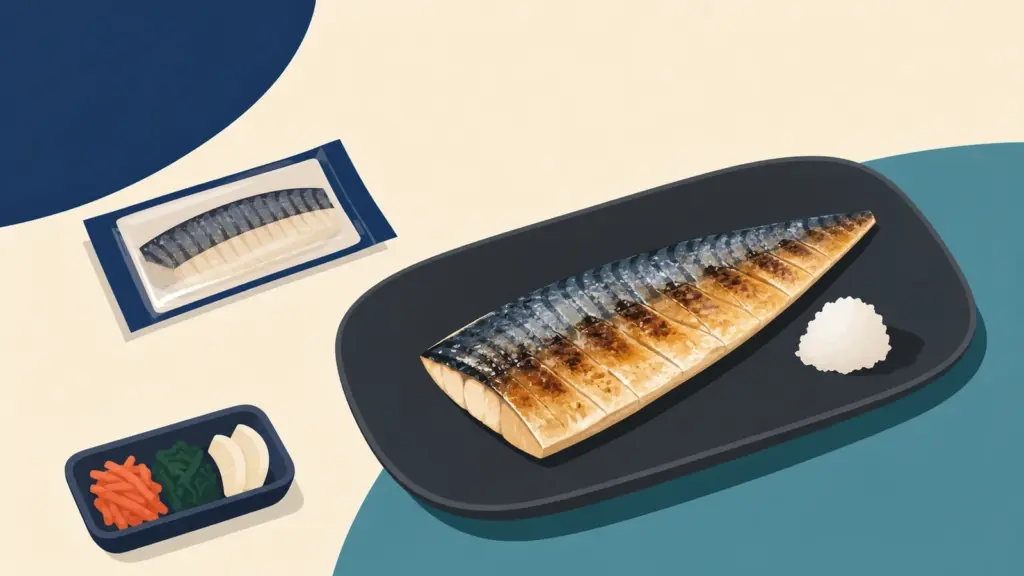
Salted fillets, butterfly cuts and individually packed portions reduce household preparation and restaurant labor. They require tight control of cut, salt, drip, packaging and thawing performance. Convenience increases processing value but also increases specification risk. Buyers should approve the finished format, not only the incoming whole fish.
From a processing perspective, this means: the buyer should use the information in the Seasonal composition study of chub mackerel as a reference framework, then verify the actual commercial lot through specifications, representative samples, test reports and production records. Published guidance or research cannot replace lot-specific approval, but it can identify the variables that should be controlled.
Operational checks
- Set salt and weight tolerance.
- Check vacuum or retail-pack seals.
- Assess drip after thawing.
- Use cooking instructions appropriate to the format.
A useful decision record should state who checked the requirement, which lot was examined, what method was used, and how the result affects acceptance. This prevents the sales team, quality team and supplier from interpreting the same descriptive term in different ways. It also makes future claims easier to investigate and helps buyers compare suppliers on equivalent commercial terms.
Safety and Cold-Chain Expectations
Mackerel’s histamine risk makes temperature history and HACCP control essential for Korean-bound products just as for other destinations. Salting, braising or grilling does not correct pre-existing histamine. Importers should review the supplier’s receiving, thawing, processing, freezing and storage controls and confirm destination-specific regulatory requirements.
In commercial negotiations, the point should be translated into measurable terms: the buyer should use the information in the FDA guidance on scombrotoxin poisoning and decomposition as a reference framework, then verify the actual commercial lot through specifications, representative samples, test reports and production records. Published guidance or research cannot replace lot-specific approval, but it can identify the variables that should be controlled.
Operational checks
- Review hazard analysis.
- Maintain lot traceability.
- Verify frozen storage records.
- Agree complaint investigation evidence.
A useful decision record should state who checked the requirement, which lot was examined, what method was used, and how the result affects acceptance. This prevents the sales team, quality team and supplier from interpreting the same descriptive term in different ways. It also makes future claims easier to investigate and helps buyers compare suppliers on equivalent commercial terms.
Building a Korea-Focused Product Line
A balanced portfolio can include premium whole or fillet products for grilling, salted products for retail, convenient portions for e-commerce and economical grades for braised dishes or foodservice. Each SKU should have a distinct specification and price logic. A single “Korea grade” description is too vague for professional procurement.
For repeat programs, buyers should convert this insight into a written control: the buyer should use the information in the FAO fisheries and aquaculture profile for the Republic of Korea as a reference framework, then verify the actual commercial lot through specifications, representative samples, test reports and production records. Published guidance or research cannot replace lot-specific approval, but it can identify the variables that should be controlled.
Operational checks
- Create separate SKU specifications.
- Use channel-specific packaging.
- Track repeat sales by grade.
- Maintain an approved alternative origin.
A useful decision record should state who checked the requirement, which lot was examined, what method was used, and how the result affects acceptance. This prevents the sales team, quality team and supplier from interpreting the same descriptive term in different ways. It also makes future claims easier to investigate and helps buyers compare suppliers on equivalent commercial terms.
Buyer Specification Checklist
Before confirming an order, convert the intended application into a written product specification. The document should identify the scientific and commercial name, origin, catch area when required, catch or production period when commercially material, processing form, individual size or portion weight, size tolerance, freezing method, glazing, declared net weight, packing, label, storage condition, required certificates, inspection method and claim procedure.
Use internal product information to keep the specification connected with real supply options. Relevant Hanxing Seafood resources include Norwegian and Japanese mackerel comparison, frozen mackerel size guide, 2026 global mackerel market analysis, and contact Hanxing Seafood. These links should be selected by the sales or content team according to the final article placement and available product.
A pre-shipment control plan can combine document review, representative carton selection, size and weight checks, visual inspection, controlled thawing, cooking or processing trials, packaging verification and loading photographs. For recurring orders, retain an approved sample or a documented reference result. When a parameter cannot be verified reliably, remove the claim or mark it for review rather than presenting an assumption as fact.
Commercial comparison should be based on landed cost per usable kilogram or finished portion. Include product yield, glazing, freight, duty, cold storage, financing, processing labor, trim loss, cooking loss and customer selling price. This prevents an apparently cheap quotation from becoming an expensive finished product.
Conclusion
Mackerel Products for Korea should be managed as a product-performance and market-fit decision. The buyer must connect biology and seasonality with processing behavior, food safety, grading, packaging, customer use and price. No single origin, size, fat level or catch month is automatically best for every channel.
Importers that use approved samples, measurable specifications, reliable source references and lot-level verification can reduce quality disputes and build more consistent programs. For current product options, packing requirements and shipment planning, contact Hanxing Seafood with the intended market, application, size, quantity and delivery window.
Looking for a Frozen Seafood Supplier?
Contact HANXING SEAFOOD to confirm current availability, specifications, packing, and quotation details.
Request a Quote