
FOB, CIF, and CNF in Mackerel Trade: Costs, Risks, and Buyer Decisions
Introduction
FOB CIF and CNF Mackerel Trade is a practical commercial system for importers, wholesalers, distributors, processors, and foodservice buyers that need to move frozen fish across borders without losing control of specification, cash flow, documentation, or cold-chain performance. The correct trade term determines which party arranges ocean carriage, pays specified transport costs, obtains insurance, and bears transit risk at different points. A misunderstanding can leave the buyer paying freight twice or discovering that insured value and coverage are inadequate. The first decision should therefore be based on the buyer’s destination market, sales channel, regulatory obligations, and acceptable risk—not on a supplier’s price list alone.
Under current ICC terminology, CFR is the formal rule for cost and freight; CNF is a common informal expression and is not a separate Incoterms 2020 rule. Contracts using CNF should state that the intended rule is CFR, Incoterms 2020, with the named destination port. Buyers can use Hanxing Seafood’s frozen mackerel buying guide as a related internal reference, while the steps below provide a separate operational framework tailored to this topic. Every commercial example should still be checked against the importing country’s current law, bank requirements, port practice, and product-specific rules.
Table of Contents
- FOB CIF and CNF Mackerel Trade: Start with Delivery and Risk
- FOB for Freight Control and Transparent Benchmarking
- CFR and the Informal CNF Expression
- CIF and the Minimum Insurance Obligation
- Reefer-Specific Costs Not Solved by Incoterms
- Documents and Control under Each Option
- A Decision Framework for Mackerel Importers
- Conclusion
FOB CIF and CNF Mackerel Trade: Start with Delivery and Risk
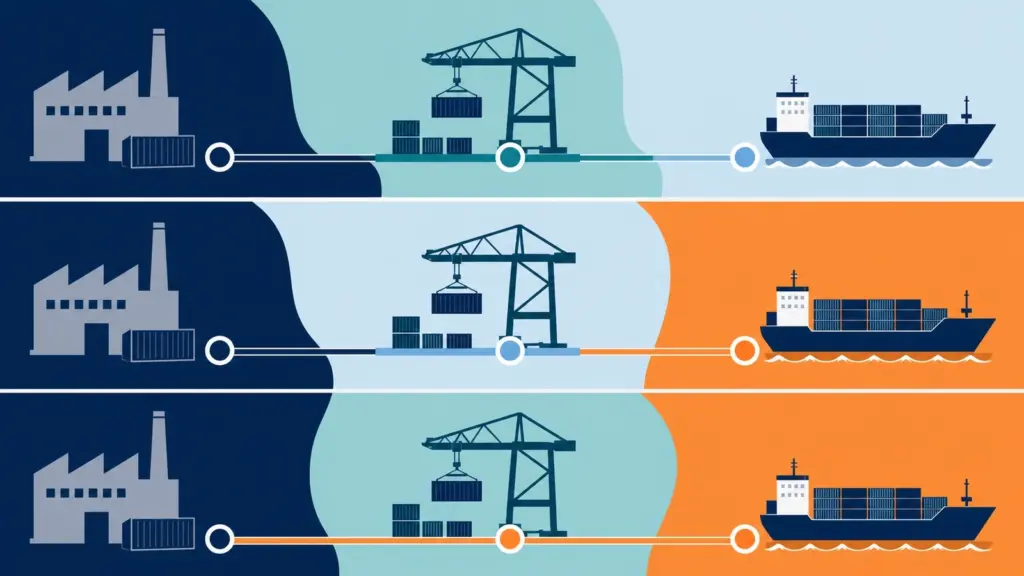
Incoterms allocate specific delivery, cost, and risk responsibilities; they do not determine product quality, payment, title, sanctions compliance, or every port charge. Under FOB, CFR, and CIF for sea transport, delivery and risk transfer occur when goods are on board the vessel at the shipment port, even though CFR and CIF sellers pay carriage to the destination port.
Comparison criteria
- Exact named shipment or destination port
- Who selects the carrier and route
- Point where risk transfers
- Which freight and origin costs are included
- Insurance obligation and claims cooperation
Buyers must separate cost destination from risk destination. Paying freight to the arrival port does not mean the seller necessarily bears transit risk to that port.
A sound decision compares like with like. The buyer should normalize net weight, glazing, packing, freight scope, destination charges, financing time, inspection cost, and expected yield before ranking alternatives. When one variable remains unclear, the quotation or proposal should be marked conditional rather than treated as final.
Decision trap: Assuming CIF means the seller is responsible for cargo condition until discharge.
FOB for Freight Control and Transparent Benchmarking
FOB can suit importers that have strong freight contracts, destination agents, and reefer-shipping experience. The seller handles export clearance and delivers the cargo on board the buyer-nominated vessel at the named port.
Commercial points to settle
- Buyer controls carrier, sailing, route, freight negotiation, and often free-time strategy
- Seller manages production, inland movement, export clearance, terminal process, and loading obligations within the agreed scope
- Buyer bears risk after on-board delivery
- Shipping instructions and booking cut-offs require close coordination
- Origin charge allocation should be confirmed because local practice varies
FOB quotations make supplier product prices easier to compare, but the buyer needs accurate freight, surcharges, destination charges, and contingency capacity. A missed nomination or late booking can disrupt production and cold storage.
Commercial clarity should be tested by asking what happens when the ideal plan fails. A usable clause or procedure explains who decides, who pays, which evidence is required, and how quickly the parties must respond. Ambiguous language often appears acceptable during negotiation but becomes costly during a delay, shortage, quality claim, or document discrepancy.
Negotiation risk: Buyer chooses FOB without confirmed reefer space or operational staff to manage carrier deadlines.
CFR and the Informal CNF Expression
Under CFR, the seller contracts and pays for carriage to the named destination port, while risk transfers when the goods are on board at origin. The buyer normally arranges cargo insurance because CFR does not require the seller to insure.
Evidence to review
- Seller’s carrier selection and freight contract
- Freight validity, route, transshipment, and surcharge assumptions
- Risk transfer at origin despite freight paid to destination
- Buyer insurance placement and notice of shipment
- Destination charges excluded from the ocean freight quotation
CNF is widely used in quotations, but the contract should replace it with CFR or expressly define CNF as CFR, Incoterms 2020. This avoids uncertainty about insurance and delivery.
The file should be reviewed for consistency, not just completeness. Names, addresses, registration numbers, product descriptions, dates, signatures, and issuing authorities should agree across documents. Where possible, validate important records with the issuing body, destination-country importer, inspection company, bank, or freight partner rather than relying only on a scanned copy supplied by the seller.
Red flag: Quotation says CNF all inclusive without listing destination terminal, documentation, and reefer charges.
CIF and the Minimum Insurance Obligation
CIF adds a seller obligation to obtain cargo insurance for the buyer’s risk, in addition to paying carriage to the named destination port. The standard insurance obligation may not match the buyer’s preferred coverage, insured value, deductible, or claims jurisdiction.
Evidence to review
- Policy or certificate issuer and financial strength
- Coverage clauses, exclusions, deductible, insured value, and currency
- Claims payable location and required evidence
- Treatment of temperature deviation, delay, inherent vice, and poor packing
- Notice and cooperation responsibilities after a casualty
Buyers should review insurance terms before shipment rather than assume the three letters provide comprehensive reefer protection. They may purchase additional cover or negotiate broader terms.
The file should be reviewed for consistency, not just completeness. Names, addresses, registration numbers, product descriptions, dates, signatures, and issuing authorities should agree across documents. Where possible, validate important records with the issuing body, destination-country importer, inspection company, bank, or freight partner rather than relying only on a scanned copy supplied by the seller.
Red flag: Insurance certificate is issued after shipment with exclusions that make a likely reefer loss difficult to claim.
Reefer-Specific Costs Not Solved by Incoterms
Frozen mackerel shipments create operational costs that may not be obvious from a trade-term label. Carrier tariffs and port practice determine many items.
Comparison criteria
- Pre-trip inspection, reefer plug-in, monitoring, and electricity
- Terminal handling, documentation, seal, weighing, and customs examination
- Demurrage, detention, storage, and additional electricity during delays
- Destination THC, delivery order, scanning, inspection, and port congestion charges
- Costs caused by document delay, customs hold, failed inspection, or rejected cargo
Add a cost schedule to the contract or quotation showing included and excluded items. This is more reliable than relying on phrases such as standard local charges.
A sound decision compares like with like. The buyer should normalize net weight, glazing, packing, freight scope, destination charges, financing time, inspection cost, and expected yield before ranking alternatives. When one variable remains unclear, the quotation or proposal should be marked conditional rather than treated as final.
Decision trap: Buyer compares CIF with FOB plus freight but omits destination charges that apply under both options.
Documents and Control under Each Option
The chosen term affects who interacts with the carrier, but the document set still requires coordinated data. Bill of lading instructions, consignee, freight status, certificate descriptions, and bank terms must match.
Document-control sequence
- Who issues and approves booking instructions
- Whether the bill of lading shows freight prepaid or collect
- Who receives carrier notices and controls release
- Insurance document requirements for CIF
- Draft review deadlines for invoice, packing list, bill of lading, and certificates
Even under seller-arranged freight, the buyer should receive booking confirmation and vessel details early. Freight control and cargo control are not identical, especially when original bills or bank documents are involved.
The stage should be treated as complete only when responsibilities, evidence, timing, and approval authority are documented. A verbal confirmation can support coordination, but it should not replace the specification, contract, inspection record, or shipment document that controls the transaction.
Control warning: Seller chooses an indirect route that meets a broad shipment deadline but creates unacceptable transit and temperature exposure.
A Decision Framework for Mackerel Importers
The best term depends on bargaining power, logistics capability, shipment frequency, destination complexity, currency exposure, and the supplier’s freight access. There is no universally cheapest option.
Management controls
- Choose FOB when the buyer has reliable reefer contracts and wants carrier control
- Choose CFR when the seller has better freight access but the buyer prefers its own cargo insurance
- Choose CIF when seller-arranged insurance is useful and the coverage is reviewed
- Avoid undefined CNF; translate it into CFR with a named port and Incoterms 2020
- Request side-by-side FOB, CFR, and CIF quotations using the same specification and shipment window
Evaluate total landed cost and operational risk. A slightly higher freight-inclusive price may be valuable if it secures scarce reefer space, while a low CFR price may hide a slow route or unfavorable destination charges.
Governance works when the control has an owner, a measurable threshold, a review frequency, and a defined response. Dashboards without corrective action merely describe problems after they occur. The commercial team, quality team, documentation staff, and logistics partners should therefore work from the same order file and escalation rules.
Escalation trigger: Selecting the term based on habit without checking current freight, free time, route, and insurance.
Authoritative Reference Points
The following official resources support the trade, food-safety, customs, or shipping controls discussed in this guide. They are reference points rather than substitutes for destination-specific legal advice:
Conclusion
FOB CIF and CNF Mackerel Trade decisions should separate freight payment, delivery, risk transfer, insurance, destination charges, and operational control. The strongest purchasing position is created before production: define the product, verify the counterparty, allocate responsibility, confirm evidence, and decide in advance how exceptions will be handled. This approach protects the buyer’s customer relationships as well as the immediate shipment.
For a transaction-specific discussion, review Hanxing Seafood’s global mackerel market analysis and then contact the export sales team with the destination country, target species, size range, processing form, packing, quantity, Incoterm, and expected shipment window. A complete request allows the supplier to confirm feasibility and quotation assumptions more accurately.
CTA
Request quotations under clearly named FOB, CFR, and CIF options so freight, insurance, route, validity, and excluded charges can be compared on the same product basis.
Looking for a Frozen Seafood Supplier?
Contact HANXING SEAFOOD to confirm current availability, specifications, packing, and quotation details.
Request a Quote